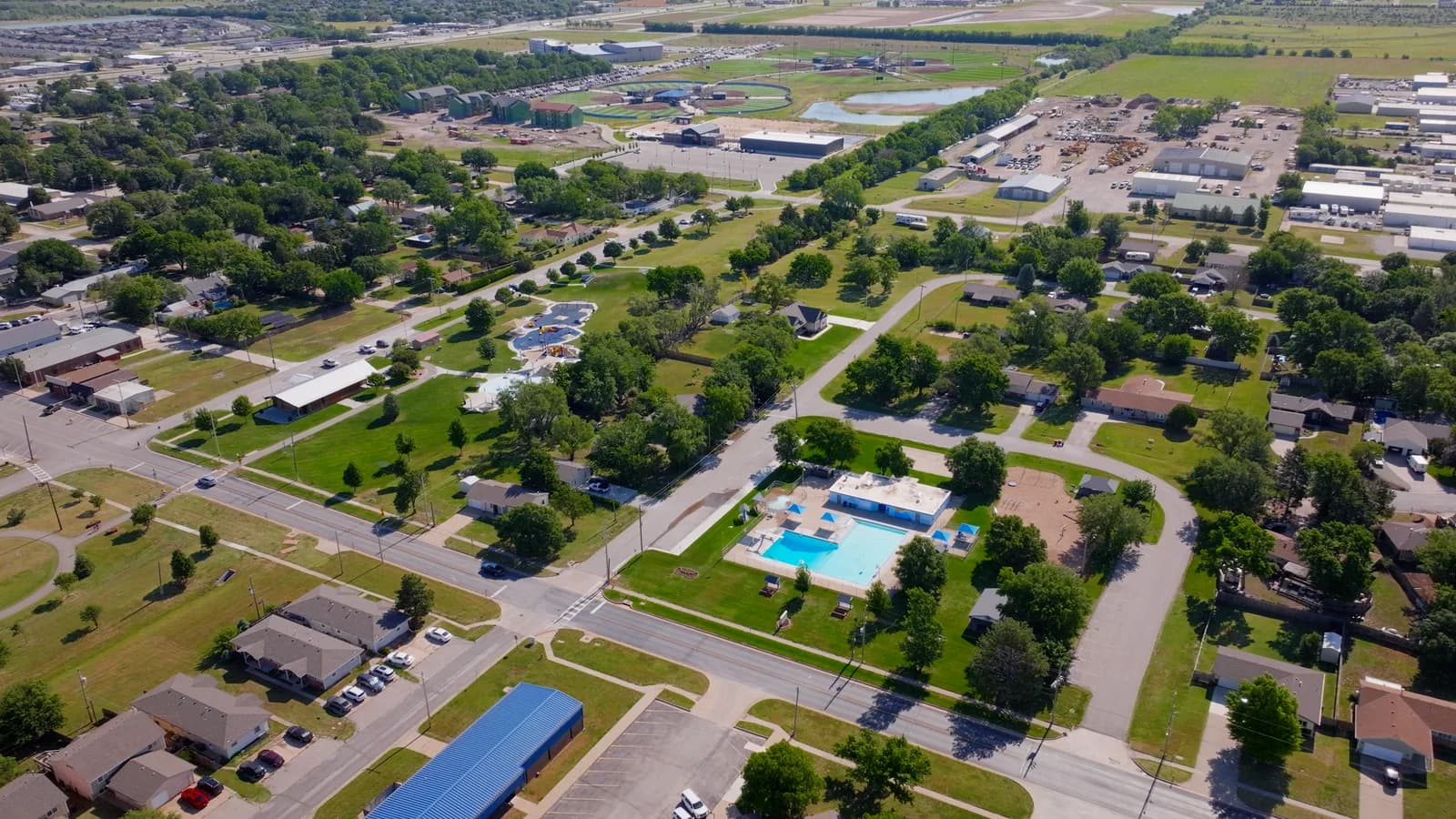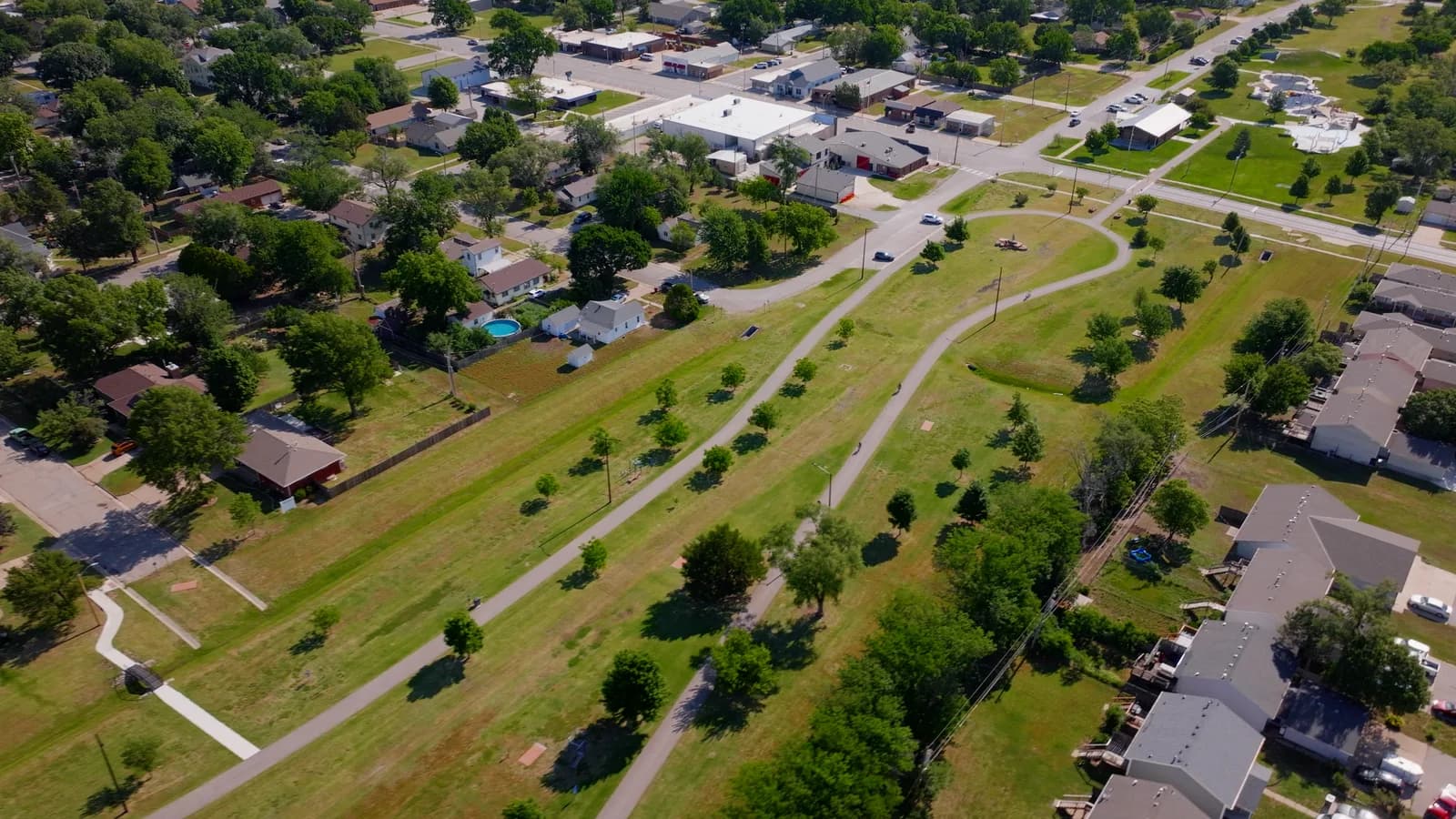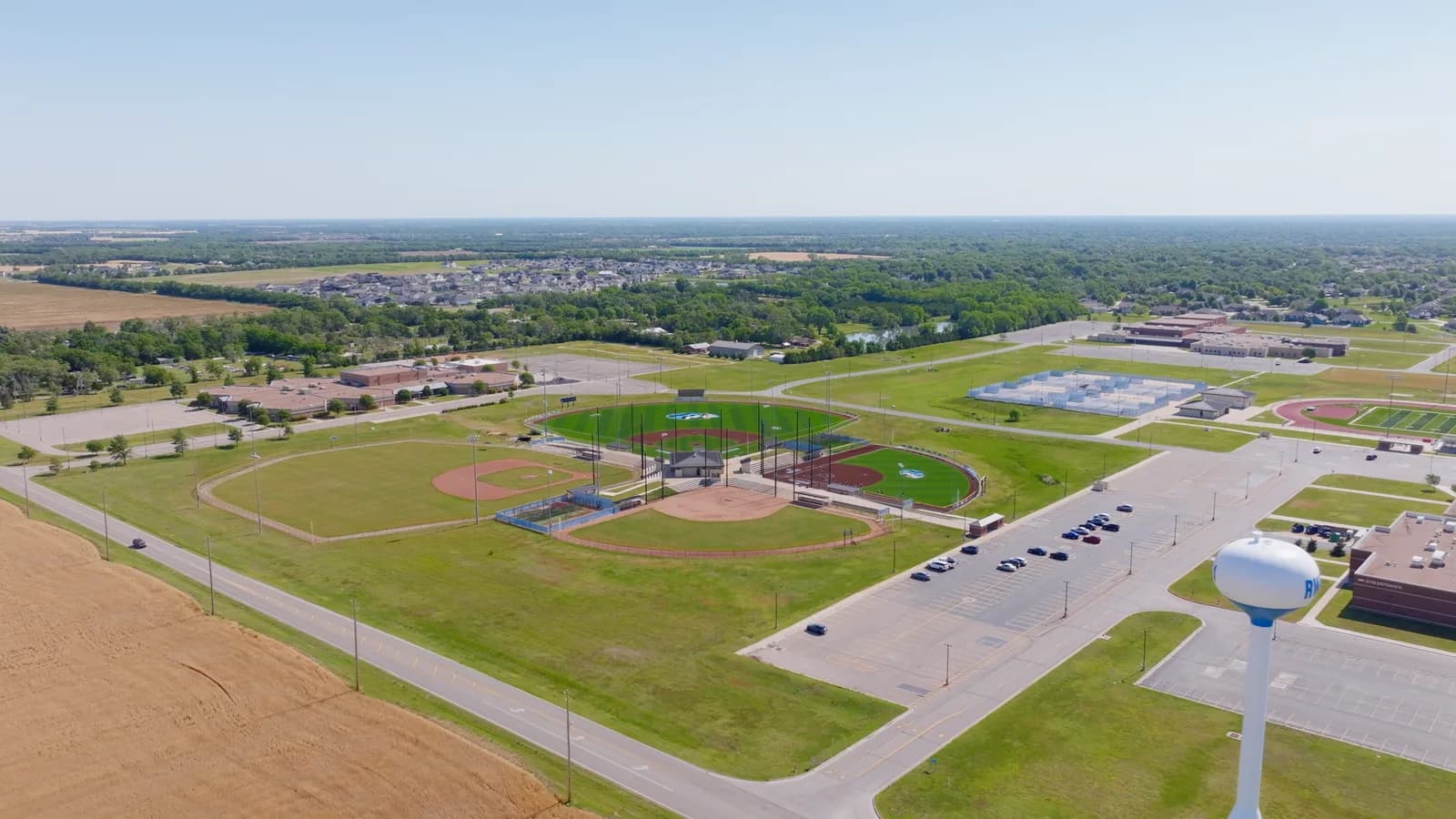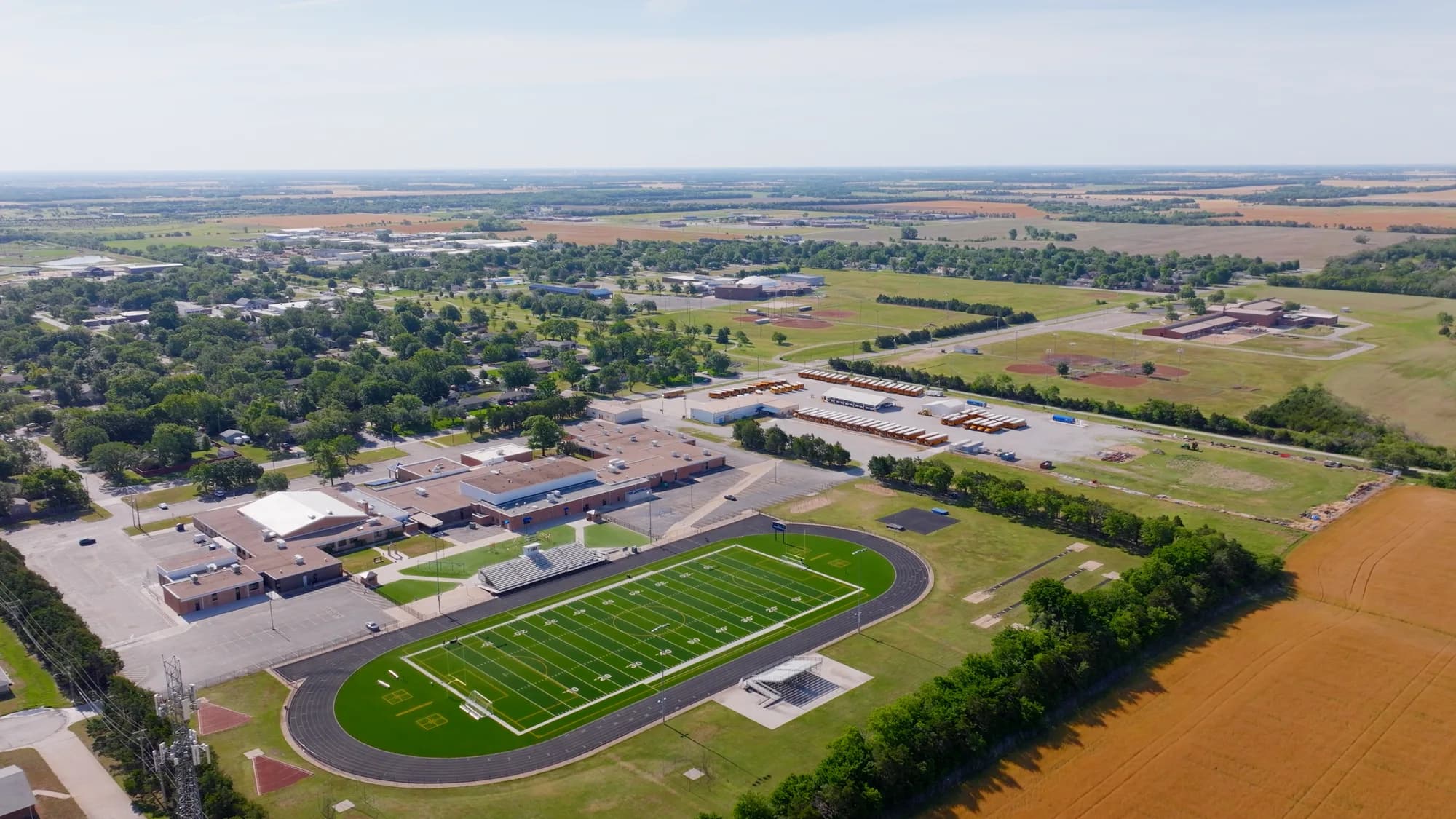
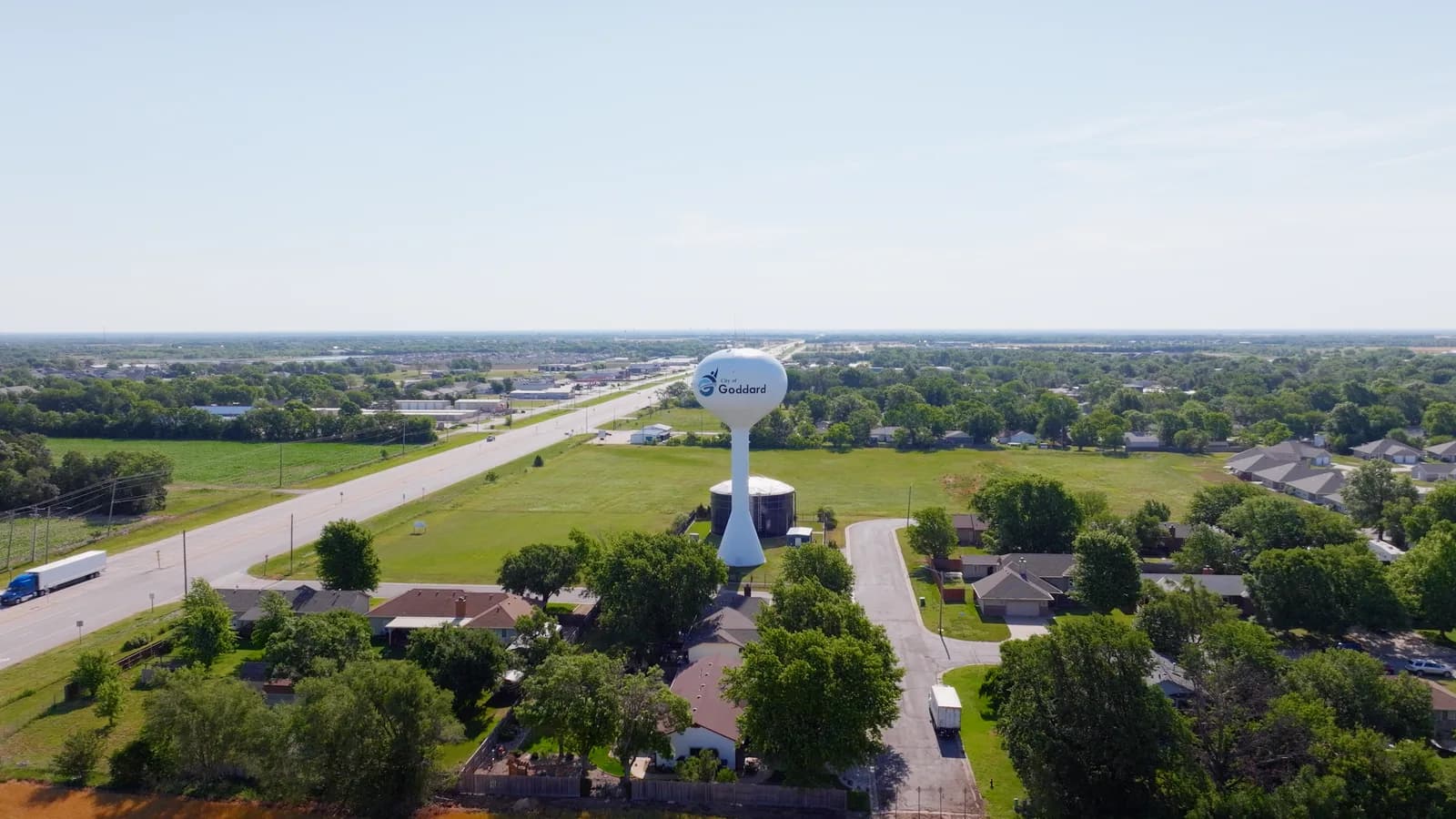
Goddard sits about 21 minutes west of downtown Wichita, and it has a completely different feel from the suburbs on the east and north sides of town. It's quieter out here. The pace is slower. You're close enough to everything Wichita has to offer, but when you pull into Goddard, it feels like you actually left the city behind.
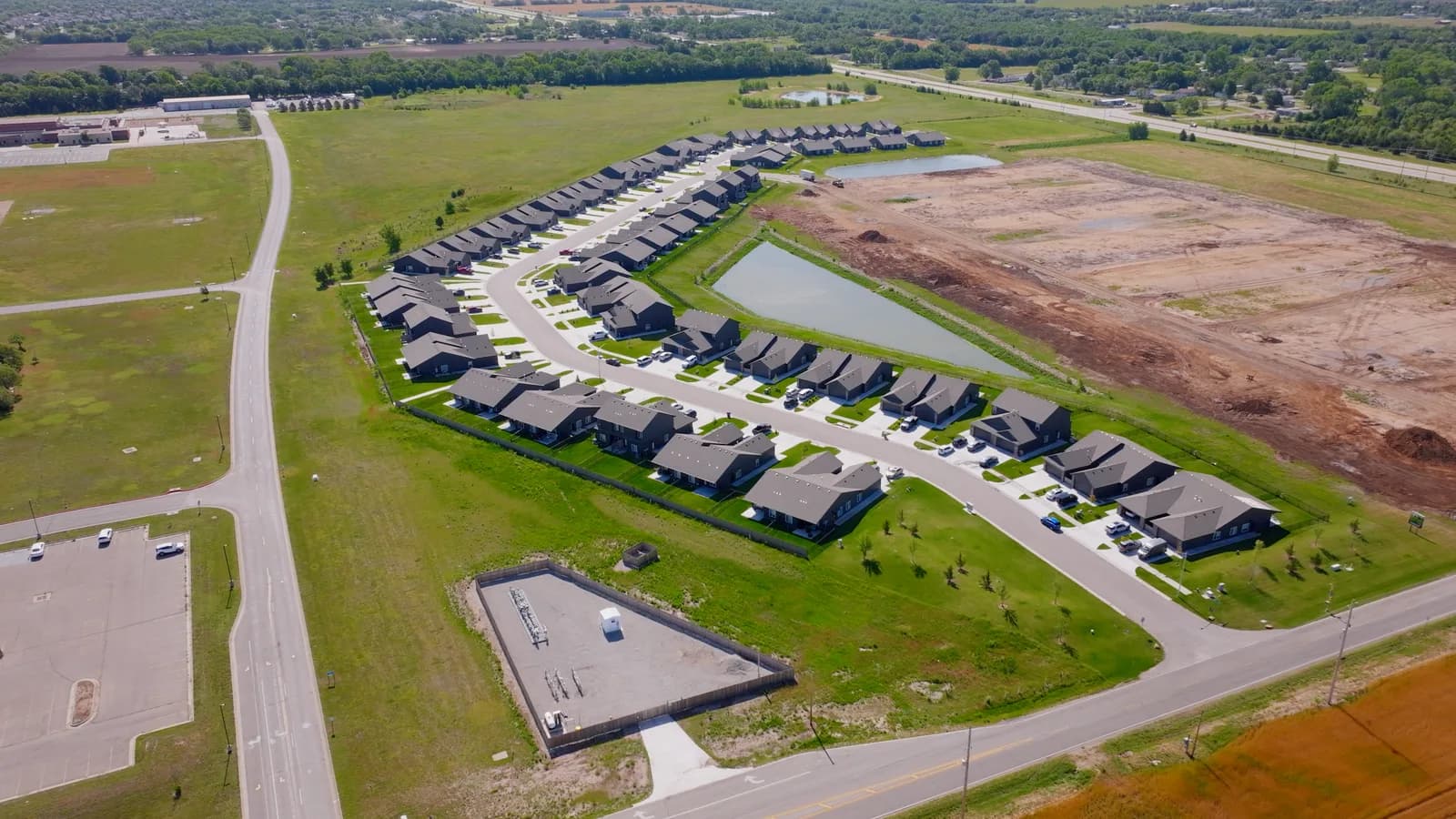
For a long time, Goddard was a small farming community that people drove through on their way somewhere else. That started changing fast. The population has grown about 30% since 2020, and the city is adding around 200 new homes a year. Over 2,000 new residential lots are in the pipeline. This is one of the fastest-growing communities in Kansas right now, and it still hasn't fully lost that small-town DNA. That combination is hard to find.
What makes Goddard genuinely stand out is Tanganyika Wildlife Park. There is no other suburb in the Wichita area that has anything like this. It's an all-inclusive zoo where you hand-feed giraffes, walk with kangaroos, swim with penguins, and spend an entire day without pulling out your wallet once. Food, drinks, animal feedings, and splash park access are all included in admission. Families drive from across the Midwest to visit. If you live in Goddard, it's a 10-minute trip.
Lake Afton Park is the other big outdoor draw. The county park sits south of town and covers 720 acres around a 258-acre lake. You can fish, swim, camp, water ski, or just sit on the dock and do nothing. It has been here since the Works Progress Administration built it in the early 1940s, and it's still one of the best family outdoor spots in Sedgwick County.
The median sale price in Goddard is about $305,000, which puts it right in the middle of the pack compared to other Wichita suburbs. You get more space per dollar out here than you will in Andover or Maize.